We sat down with Chef Alvin Leung for a chat at his restaurant Demon Duck in Banyan Tree. It was a Monday evening, early November and the weather had just cooled down. Indoors or outdoors, the team had asked prior our arrival. As we walked towards the terrace – you could feel the cool evening sea breeze. Let’s do it outdoors, I told them.

Click for Summary
Demon Duck’s outdoor terrace is beautiful over the winter months. It’s an intimate spot – framed by lush trees, and warm-glowing lanterns suspended in-between.
Chef Alvin Leung walks over to greet us. Spotting a long patterned coat, round sunglasses and blue sneakers, he was just like what I had in mind : Eccentric, and so cool.

A New Narrative for Chinese Cuisine
We started off on a personal note – sharing with the chef how, as Chinese ourselves, there is a particular sense of pride in seeing a Chinese chef receive international recognition and appreciation, making his mark on the global culinary stage.
This led us to a broader question: What does it mean to be part of a generation of Chinese chefs who are helping reshape the way the world perceives Chinese cuisine?
For Chef Alvin, it is very much about challenging perceptions and broadening people’s understanding of what Chinese cuisine can be.
“Many people have different interpretations (of chinese cuisine). My mission has always been to elevate people’s interpretation of it,” he explains.
He goes on to reflect on how Chinese communities have spread across the world, with their food traditions evolving along the way.
“Chinese have immigrated to a lot of places around the world. Chinese takeaway has developed its own definition. A lot of times people don’t realise our cuisine is very refined. So I just want to make people aware, and change their minds of what Chinese Cuisine can be.”
It is a mission that goes beyond the plate.

The Evolution of a Culinary Journey
Our conversation then turned to Bo Innovation, Chef Alvin’s flagship restaurant in Hong Kong, and his journey through more than 23 years in the culinary industry.
Interestingly, his entry into the restaurant world was far from conventional. “I never worked in a restaurant. I never went to culinary school. I opened my first restaurant when I was 42. I started quite late,” he muses.
Looking back, he sees those early days at Bo Innovation as a learning curve. “I think when I first started Bo Innovation – that was a very early part of my career – not just starting a restaurant, but in terms of the learning curve.”
Having witnessed the industry evolve over more than two decades, we asked what changes had stood out to him most. His response was pragmatic, reflecting the realities of running a restaurant in an increasingly demanding market.
“At the end of the day, a restaurant is there to sell and to serve the market,” he says, “So if the market change, you have to change,” he adds.
We touched on the influence of social media, the expectations of a younger generation of diners and the challenges facing the hospitality industry today. He acknowledges that the landscape has become increasingly difficult, particularly in the wake of the pandemic. “This is a very tough world right now, especially in the F&B market, and after Covid.”

🚨 Keep up to date! Join the Dubai Family Leisure Guide Broadcast Whatsapp Group! 🚨
A Chef Who Never Switches Off
Moving away from the business side of things, we turned to a lighter question: When dining out, does he find himself instinctively analysing the food as a chef, or can he switch off and simply enjoy the experience like any other diner?
He laughs before admitting, “Well, it depends who I’m with.”
When pressed further, his answer is rather telling: “No, I never switch off.”
Perhaps that comes naturally to someone with an engineering background. Having been educated as an engineer and coming from a family of engineers, he tells us that he genuinely enjoys analysing things. It seems that instinct to observe, question and understand never quite leaves him.

Rethinking a Classic : The Demon Duck
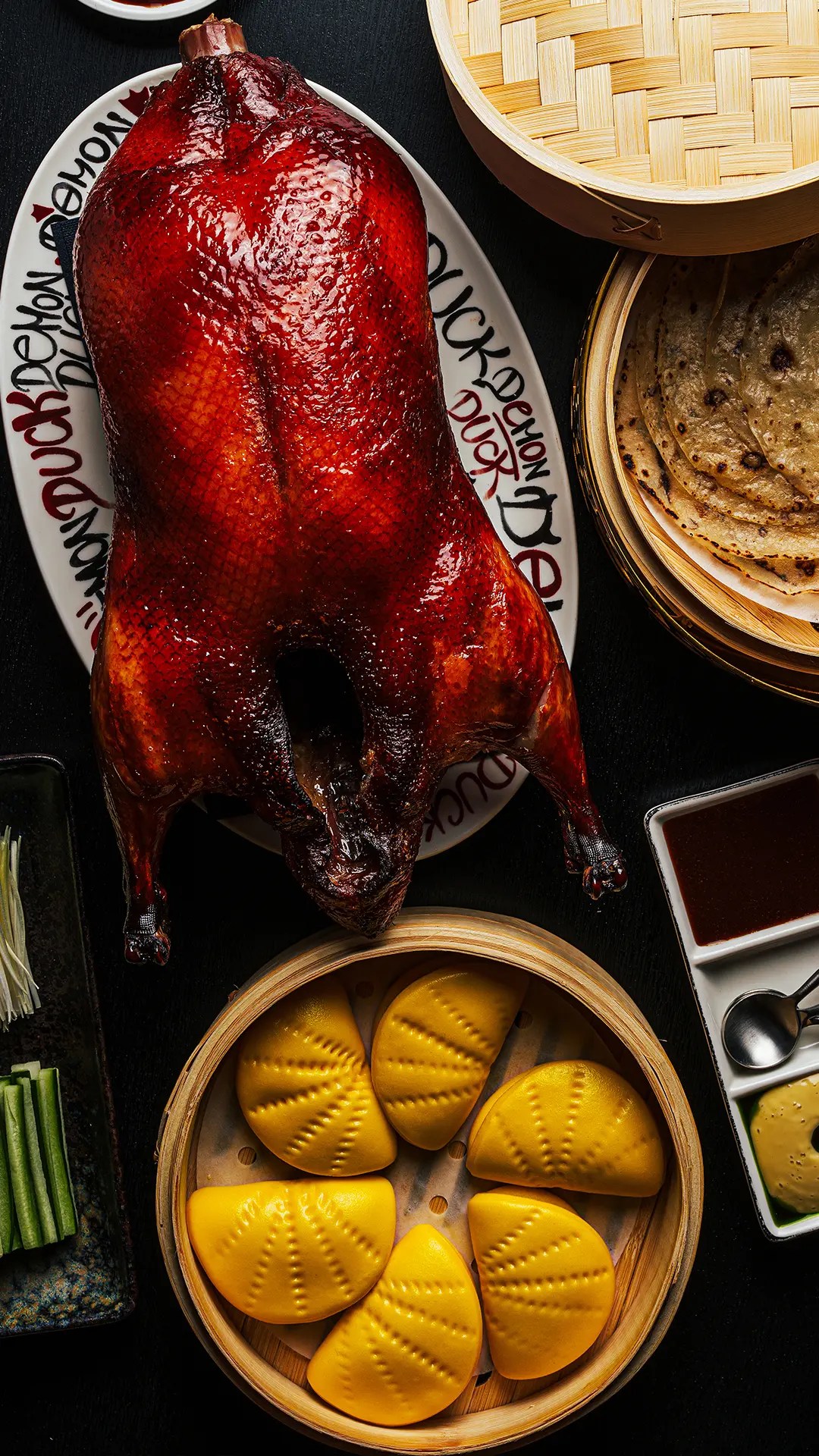
Our conversation naturally turned to Demon Duck and, of course, its signature dish – the Demon Duck itself.
Having tasted the dish, one detail that particularly caught my attention was Alvin’s choice of bao instead of the more traditional pancakes. It reminded me of a familiar combination from Malaysia, where bao is paired with pork belly. I was curious whether this regional influence had inspired his interpretation, or whether the idea had come from somewhere else.
“Actually, I think it came from New York’s Chinatown, where they use bao instead of pancakes,” he explains.
Alvin went on to share how his interpretation of Peking Duck differs from the traditional preparation, offering some interesting historical context along the way. He explained that the crispy skin was traditionally considered the most prized part of the duck, while the meat was treated separately.
His approach, however, is to bring the two together and create something more substantial.
“I try to make the dish a little bit more hearty, so we eat the meat as well as the skin. And I think when you eat the meat together with the skin, the bun is better because it tends to absorb the juice rather than the pancakes. With the pancake, you’re going to get juice all over your mouth. The bao is just for practical reasons,” he says
We were also curious about another detail: why the bao is infused with calamansi. His answer was refreshingly straightforward. The citrus is there to introduce a touch of acidity, cutting through the richness of the duck and adding another layer of flavour.
Inside Demon Duck’s New Menu : Tradition, with a Twist
The conversation then moved onto some of the new additions to Demon Duck’s menu, including the Pumpkin Ma Po Tofu (麻婆豆腐). I was particularly interested in the decision to incorporate pumpkin into the dish, and asked Alvin where the inspiration came from.
“I have seen it done in other places. And I think naturally, pumpkin sweetness and the spiciness of Ma – it’s a good buffer to kick down the spices a bit.”
It was an interesting explanation, particularly given Alvin’s observations on the growing popularity of Sichuan cuisine around the world. He noted that many restaurants are increasingly toning down the Ma (麻) in Ma La (麻辣) dishes, as the combination of numbing and spicy flavours can be a little overwhelming for some diners.
“They’re kind of adjusting to the international market,” he explained. “I think it’s good because it provides a different experience, and sometimes, you know, not everybody is equipped to take that numbness.”
We also discussed some of the other new additions, including the Grilled Asparagus with Century Egg Cream, where the century egg is transformed into a sauce, offering a different way to experience an ingredient that can be quite polarising.
Another dish that caught my attention was the Crispy Duck and Pomelo Salad, where the Duck in this case – Alvin explained, is based on the Crispy Duck (香酥鴨, Heong So Ngap) originating from London’s Chinatown.

Festive Menu
We also spoke about the upcoming Festive Menu at Demon Duck.
Alongside some of the classics, diners can look forward to dishes such as Wagyu Beef Tataki with Oscietra Caviar, Duck and Black Truffle San Choy Bao, and a Signature Lobster Lo Hei. And, of course, no festive celebration at Demon Duck would be complete without a festive-edition of the Signature Dessert Platter.
I was particularly pleased to see Lo Hei (撈起) making an appearance on the menu, given that it is such an integral part of our celebrations – specifically during Chinese New Year. I asked Alvin how he approaches introducing a dish so deeply rooted in tradition to an international audience.
He explained that each of his restaurants has its own identity and purpose, and that the approach to the menu reflects this.
“With all my restaurants, different restaurants have different goals. Here in Demon Duck, it is more about comfort, and I always say, Taste is King. So if it tastes good to some people, it should taste good to a lot of other people.”
It’s a refreshingly straightforward philosophy, and perhaps the best way to approach festive dining: while traditions may differ from one culture to another, the enjoyment of good food is something everyone can appreciate.
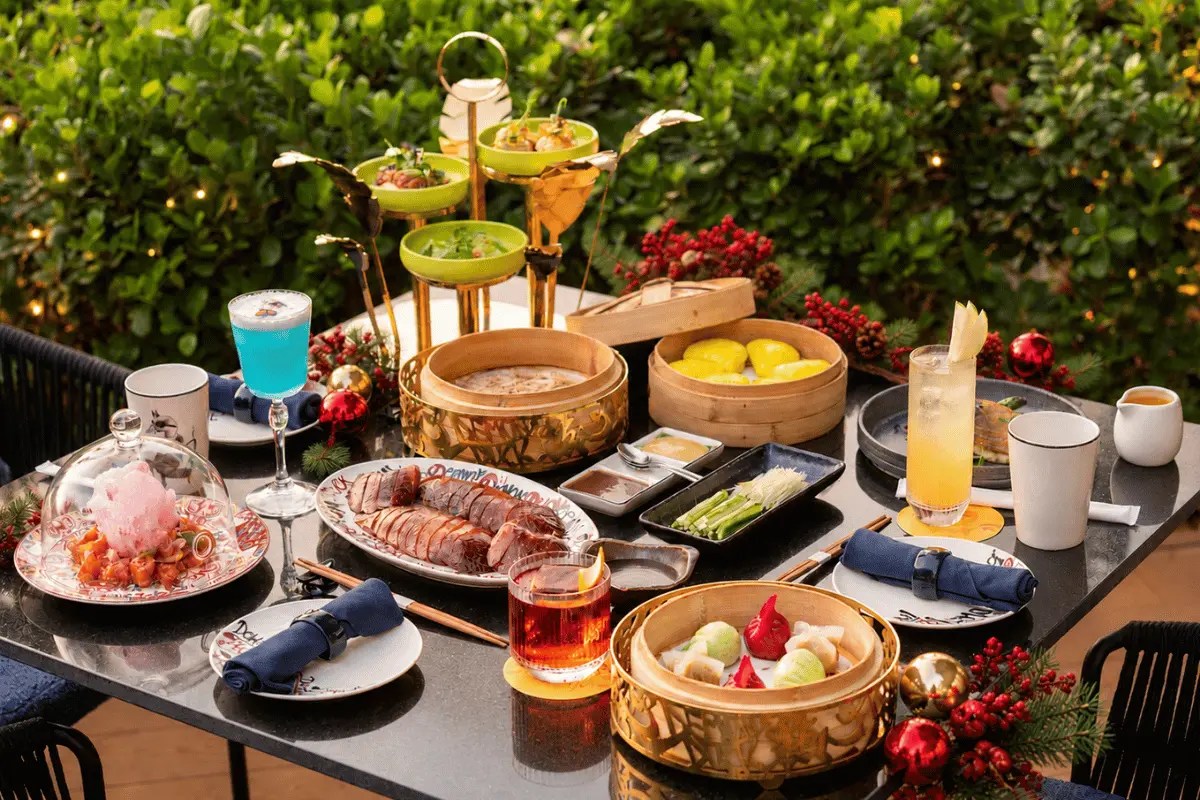

Demon Duck is open from 6pm to 12am Daily, and from 1pm to 4pm for their Saturday Brunch. Demon Duck is also taking bookings for Christmas Day Brunch (Adults-only), Boxing Day Brunch and New Year’s Eve (Both, families welcomed). For more information, see banyantree.com